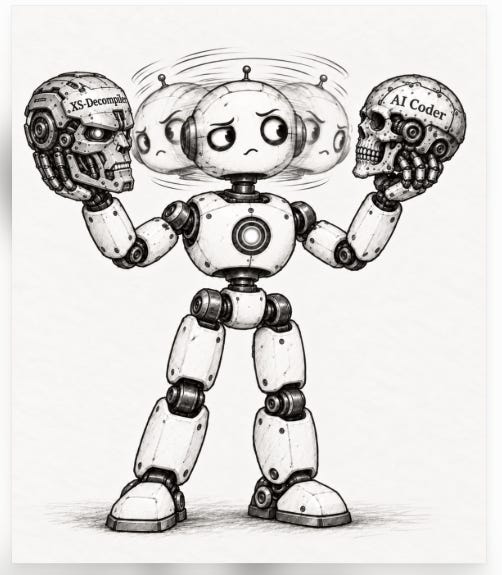
Is AI Really Cracking Proprietary Software?
You’ve probably seen the headlines. AI coding agents are now decompiling some of the most iconic commercial games ever made.
Super Smash Bros. Melee. Snowboard Kids. Super Mario 64 DS. And even major commercial shooters. According to the teams behind these reconstruction projects, AI agents are rebuilding software once locked inside proprietary binaries with astonishing precision.
This could shake the software industry to its core. For decades, the deal was simple: sell the executable, keep the source code secret, and protect your business. Now that deal could be falling apart. Or at least that’s what we’re being told.
But wait. What exactly has AI recovered?
Yep, you can give your AI coder a list of everything a game appears to do and then proudly show how beautifully it reproduces those features. But don’t tell an experienced software developer that this means you’ve recovered the code the original developers wrote.
Nope. And here’s why.
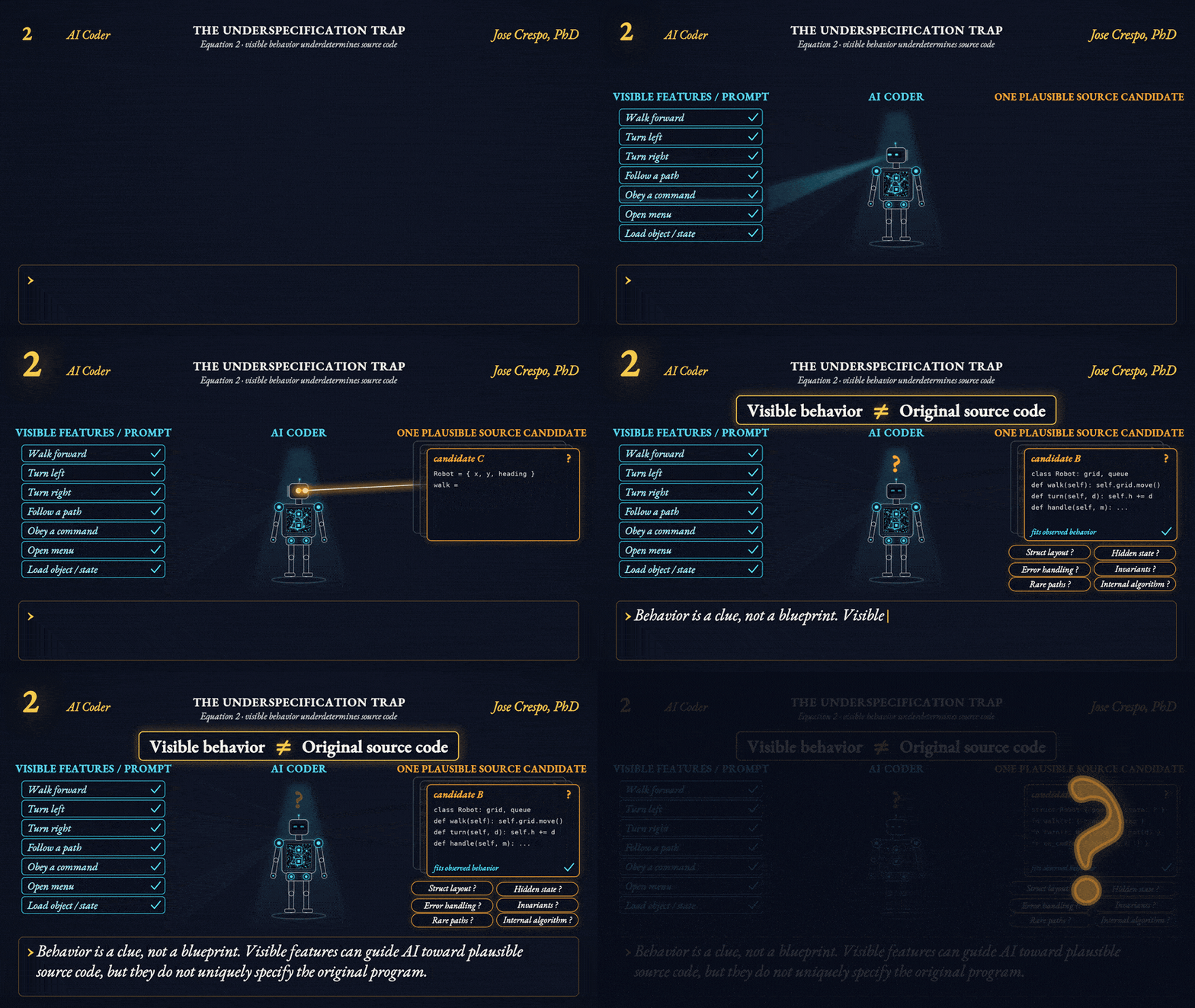
See what happened? The AI reproduced everything on the list. But that still doesn’t tell us what the original code looked like.
And that’s precisely what the AI decompilation hype is mixing up. Rebuilding what a program does, reproducing its machine code, and recovering its original source are three very different achievements.
Even a perfect byte match cannot necessarily bring back the original programmer’s names, abstractions, or intentions.
And this isn’t just a theoretical concern. We already knew that AI-decompiled code can be easier to read while being less functionally correct, and that reconstructed software can pass all its supplied tests and still behave differently from the original.
But suppose we go one step further. Forget whether the game merely looks right or passes its tests. What if we could reproduce the original machine instructions, byte for byte? Surely that would settle the question. Right?
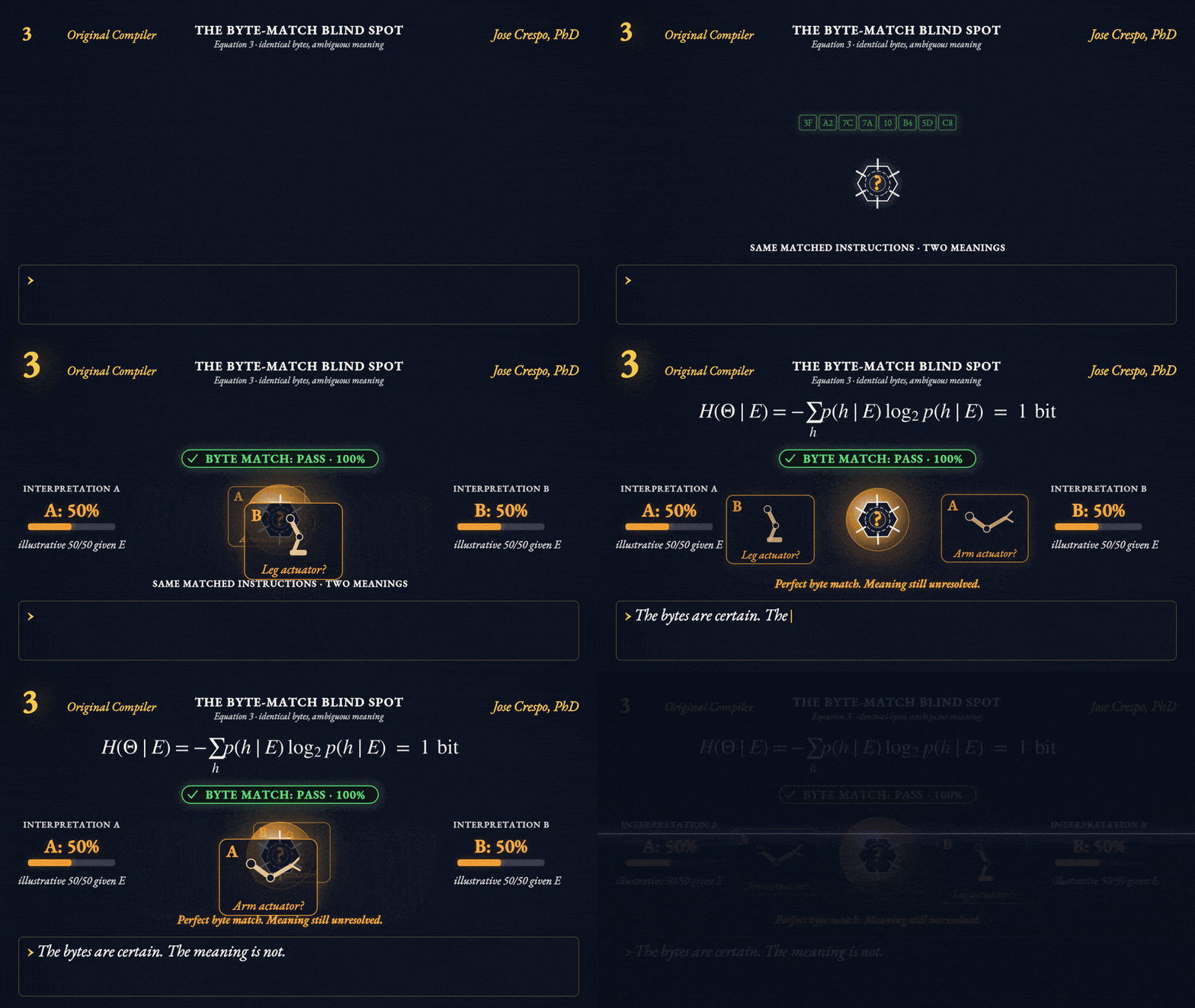
Nope. Even a perfect byte match doesn’t necessarily tell us what the original programmer called something, what it was meant to represent, or why it was designed that way.
The bytes are certain. The meaning is not.
So by now, we have every reason to seriously question how much of the original software these AI techniques have actually recovered, despite all those impressive claims of success.
From AI Guesswork to the XS Decompiler