


The Mythical Man-Month Meets the Mythical 10x AI Developer
If you’ve worked as a software developer, chances are you’ve survived one of those corporate cost-cutting crusades where productivity suddenly becomes the magic word for reducing headcount.
And guess what management loves to bring up? Yep, you probably guessed it already: the mythical 10x developer.
When profits start sinking, you know what a desperate CEO loves to imagine: fewer developers somehow producing ten times more software.
Problem solved.
And then comes the cherry on top: one of the most misunderstood books in programming history, Frederick P. Brooks Jr.’s The Mythical Man-Month, conveniently twisted into the argument that adding developers only makes projects slower.
And if cutting staff means producing more software at a lower cost while boosting profits, what CEO wouldn’t fall in love with that brilliant business strategy?
But we developers know all too well what really goes on in the software engineering machine room, where the messy everyday reality gets conveniently swept under the corporate carpet: software development isn’t a bloody typing contest.

And this isn’t just cinematic exaggeration. Want evidence? Microsoft’s research shows how organizational structure and coordination affect software quality.
You can get a better feel for the problem from the animation above. Add developers to independent tasks and output can grow. Put them to work on tightly coupled code, though, and coordination costs can swallow whatever productivity you hoped to gain. Hire too few, and the project crawls while the bills keep piling up.
There’s no magic team size. Getting it wrong can cost a bloody fortune.
So we were stuck with this human-team conundrum for decades, until AI came along promising to make every CEO’s dream come true. Developers could finally stop putting out fires, managers might actually deliver working software on time, and the bosses are practically drooling over the prospect of firing half the engineering department, shipping twice as fast, and pocketing the difference.
Who needs a miracle when you’ve got AI and a spreadsheet full of salaries to cut?
Is AI Making This Bloody Mess Even Worse?
And perhaps those CEOs have good reason to dream. Imagine one developer running an army of AI coding agents under a single architectural vision, with the firepower of an entire software team but without the usual coordination circus. The mythical 10x developer might finally become an everyday reality, at a fraction of the payroll.
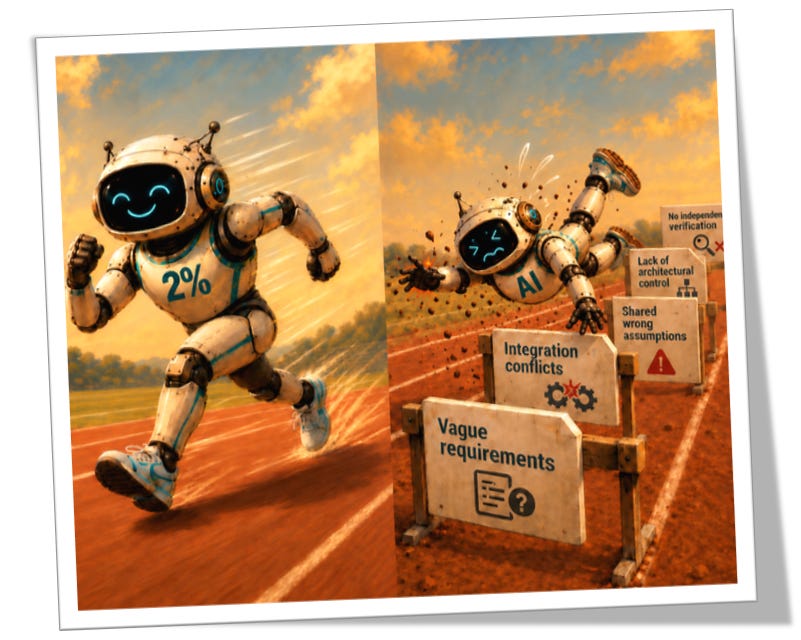
Unfortunately for those salivating CEOs, reality has other plans: AI agents can create the same bloody coordination mess as human developers, only at a speed that multiplies the chaos.
Watch the animation below. All that coding horsepower means jack shit if the software doesn’t actually work. And the productivity figures paint an even uglier picture.
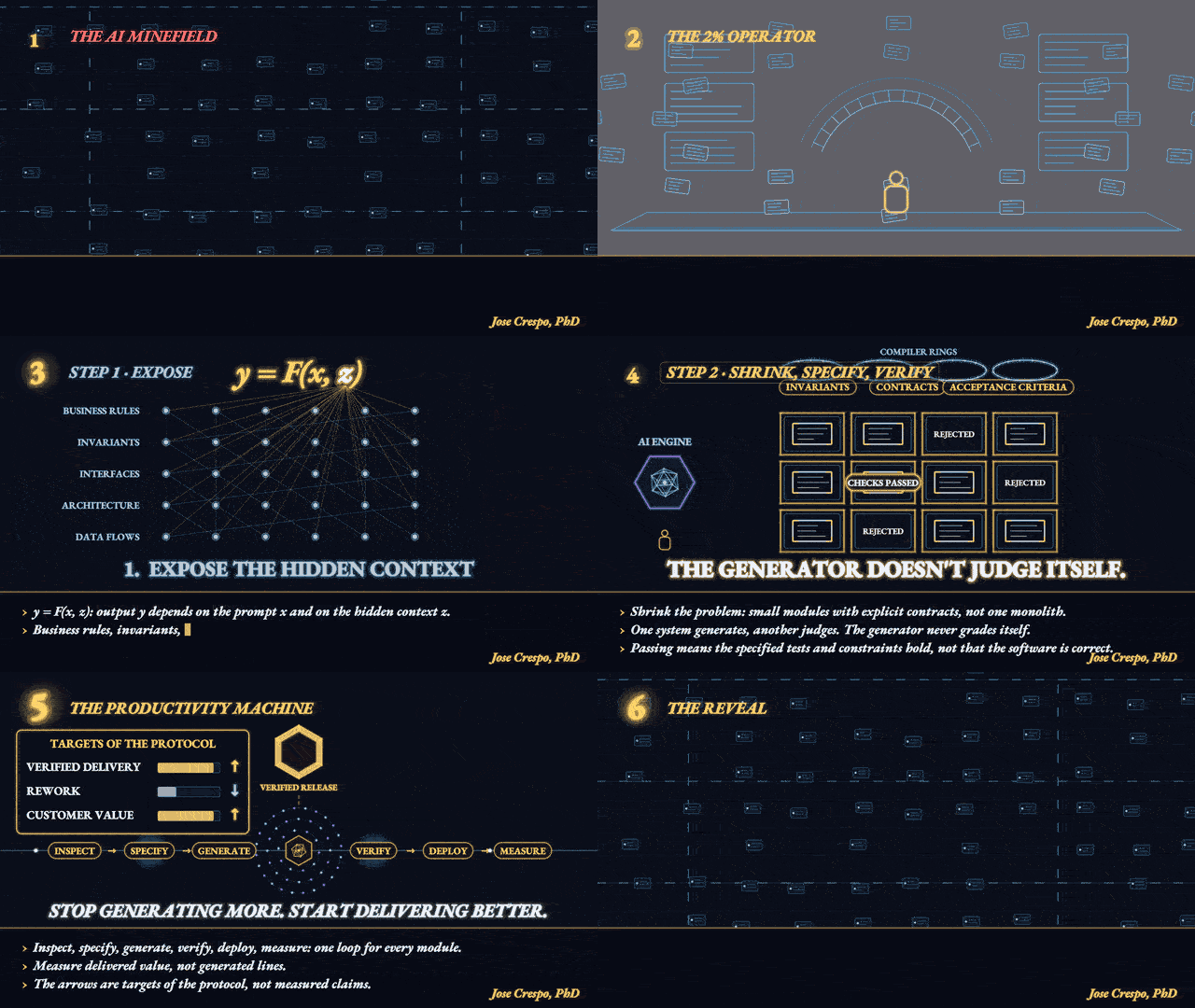
Impressive coding speed, isn’t it? Shame the software can’t keep up.
Generating mountains of code is easy compared with delivering reliable, commercially valuable software, especially when AI inherits all the tangled dependencies and conflicting requirements that made development such a bloody nightmare in the first place.
Don’t take my word for it. Google’s DORA research shows how AI can amplify both the strengths and weaknesses of existing engineering practices.
In other words, give AI a broken engineering process, and don’t expect a miracle. You might just get the same bloody disaster running at machine speed.
Let’s put some numbers on the table.
Because if AI coding really is the productivity revolution we’ve been promised, surely developers must be reporting extraordinary gains left, right, and center.
Right?