


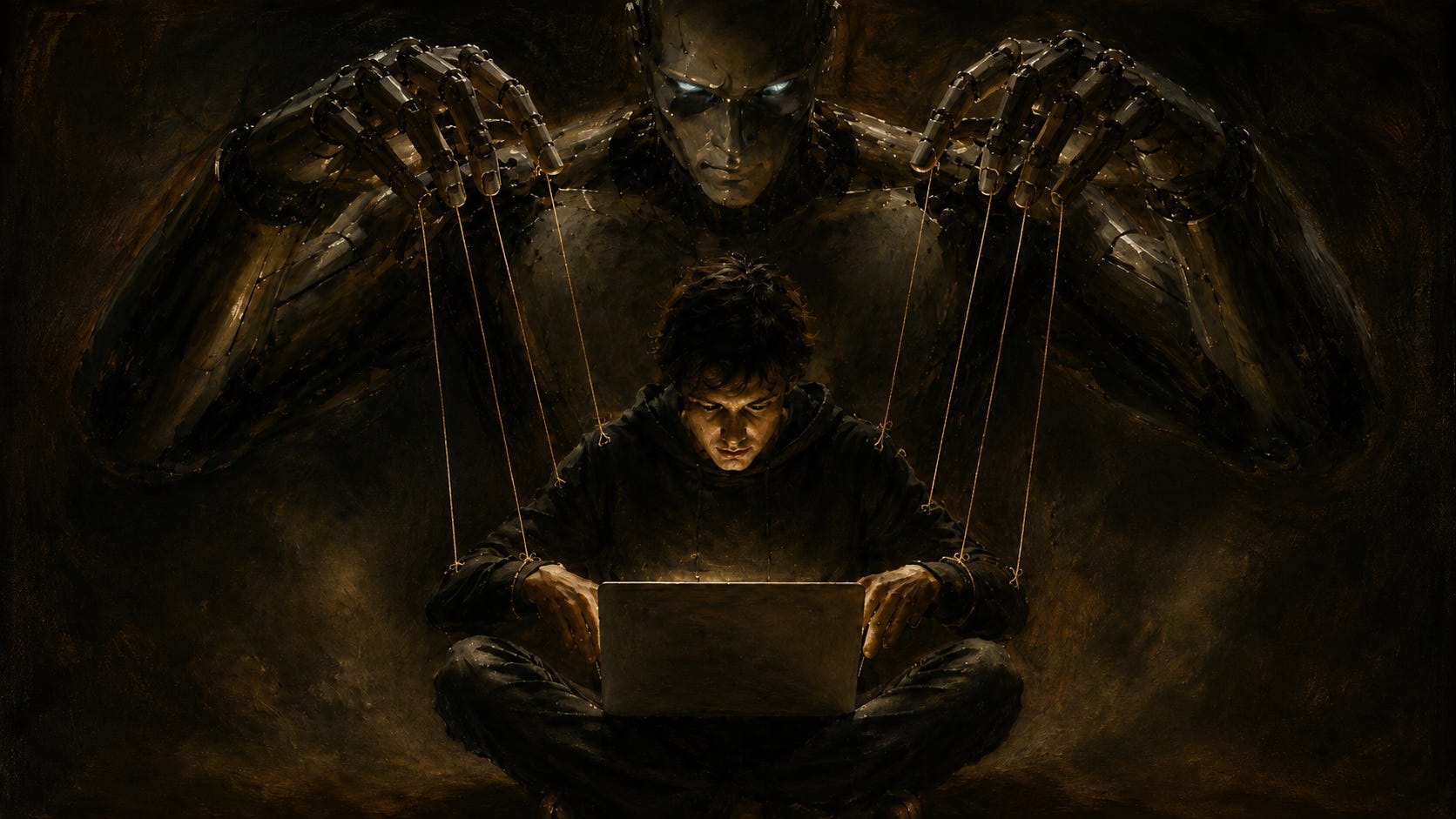
Coding was the first layer to fall.
AI engineering still looks protected, but that safety is thinner than it seems. It is built on the same flat-vector imagination that made today’s models powerful and fragile at the same time.
The next defensible skill is not simply building bigger models or wiring more agents together.
It is learning how to place computation inside geometry, where context can finally be measured instead of guessed.
Software Development Is Already on AI Life Support
Many of us saw the writing on the wall the moment the COVID pandemic lifted and the new generation of transformer chatbots arrived.
First, they gutted Stack Overflow.
Now they are coming for entire professions, and software development is the first white-collar field where the damage is impossible to ignore.
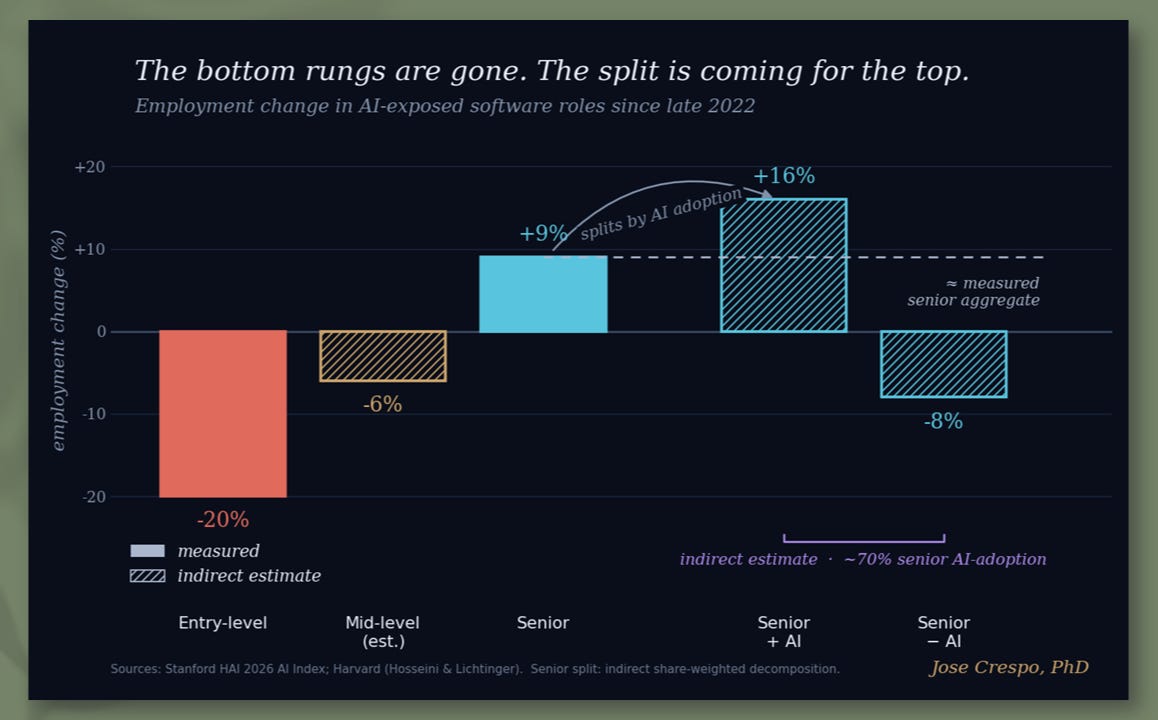
Junior and mid-level positions are shrinking at a pace the industry has never seen before, and the squeeze is now reaching senior roles too.
On the other side of the coin, for now, the view looks better.
AI engineers, and everyone whose output has been multiplied by an AI assistant, seem to be thriving.
But are they actually safe?
You Need an AI Workflow. And Now It Is Almost Too Late.
The first brutal lesson from the wreckage of tech jobs is simple:
This is no longer a matter of choice.
If you work in tech, you either build your own workflow of AI assistants now, or you start looking for a skilled trade outside the blast radius.
Yes, humans are still needed in the loop. Yes, today’s flat AI is still far from replacing a serious developer end to end. And yes, if you ship production code, you still supervise everything the assistant hands you.
But none of that is an argument against using AI.
It is an argument against using it badly.
And the worst way to use AI is to lean on a single assistant as if it were a magic black box.
Claude, Cursor, ChatGPT, Copilot, whatever name you prefer, none of them should be trusted alone.
Some of you already know this. Unfortunately, many still do not: one AI code assistant is not a workflow. It can miss the context, misunderstand the problem, and dress a bad fix in clean code.
So if your whole setup is one assistant and blind trust, you are not engineering with AI. You are working with a chimera: part autocomplete, part sycophantic parrot.
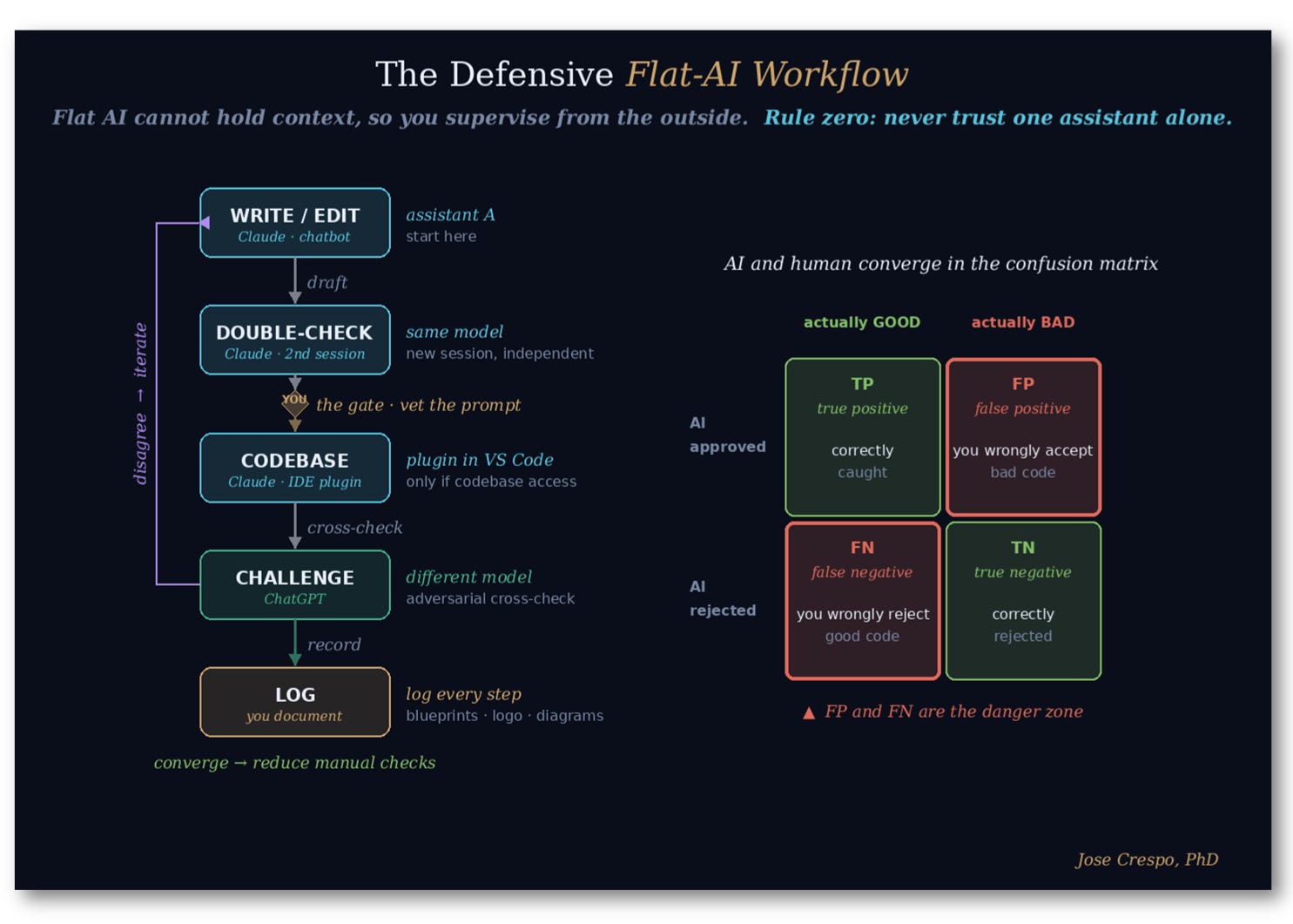
And because today’s AI still lacks real Bayesian judgment, you have to do something the model will not reliably do for you: read the confusion matrix.